CoLiving Review
Kotohira - Japan
Kotori
Kotori Kotohira is a hostel-meets-coworking in the heart of rural Shikoku, where a month-long pop-up coliving with Alt turned into real friendships with the town itself.
Jump to a section
Why Kotohira, why Kotori?
Looking for an honest Kotori Kotohira review before you book? I arrived at Kotori as part of a month-long pop-up coliving organized in partnership with Alt Chiang Mai. During a talk at Alt, John mentioned this first pop-up attempt in Japan, in a small town far from the usual tourist crowds. I jumped on it for three reasons: it was my first time in Japan, my first pop-up coliving, and a chance to see a side of Japan away from mass tourism, though I still made time to explore more of the country during my stay.
Pop-up coliving - How it works
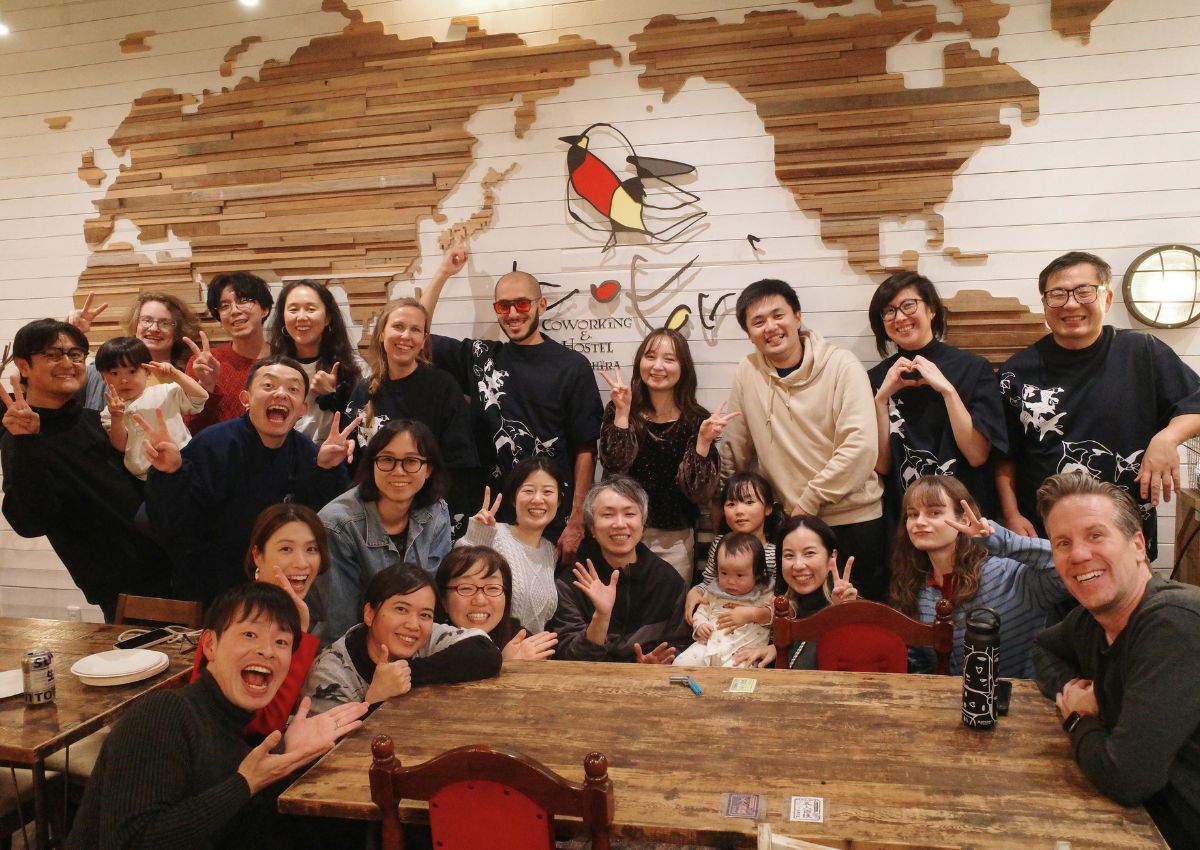
A pop-up coliving is a short-term version of a regular coliving, here for one month. There were seven of us, small enough to build a genuinely tight community, always someone around for coffee, a walk, a game of Catan, or karaoke at night. Kotori itself is a hostel, not originally built as a coliving space, but with an inside coworking and few private rooms and a dorm.
Wifi
Workspace
Community
Value for Money
Wifi & Connectivity
Rock solid across every floor, no issues at all during the whole stay.
Workspace & Productivity

The ground floor holds an open common area with sofas and low tables, ideal for hanging out, reading, or working, open to anyone passing through, so it can be quiet one moment and lively the next. There’s also a table area on the ground floor for working, eating, or just spending time with people.
The third floor is where the dedicated workspace lives, split in two. On one side, a few closed desks bookable for private calls, big central tables, wall desks, monitors on loan, and two small nooks for working a bit more apart. Soft lighting, a coffee machine, mini fridge, kettle, tea and coffee available to stay as long as you like. On the other side, a large room for chilling, yoga, group activities, movie and game nights, or workshops, with fake green grass on the floor, wooden platforms, and desks along the wall, bathed in light and pleasant to work from too.
This is one of Kotori’s real strengths: plenty of different spots to work depending on your mood, solo focus, a shared table, a relaxed session with friends, cushions in the chill room, or your own room. Wifi is solid everywhere, no connection issues on any floor.
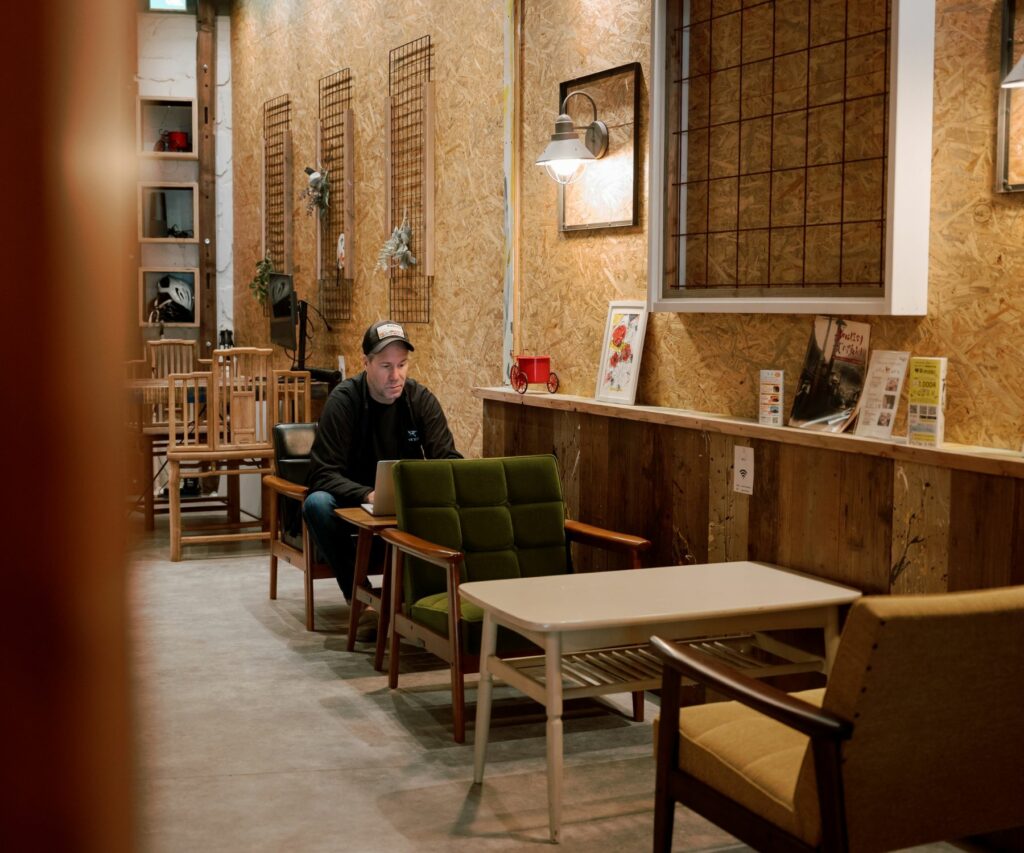
Kotori’s coworking space is also open to local remote workers, which adds another layer to the connection with the town regardless of whether you’re there for a pop-up or not. One of the desks is used by a local company, and I got to meet remote workers based in Kotohira this way too, including Mr. Beer (his nickname), who owns several local shops or Chebi, a local photographer and videographer.
Kotori - A growing digital nomad destination
Kotori itself is a hostel, so other travelers pass through too, mostly Japanese visitors staying a night or two, occasionally travelers from elsewhere, and sometimes other digital nomads. Kotori is growing into a coliving in its own right after several pop-ups, and I joined the very first one.
Community & Social Life - during the pop-up
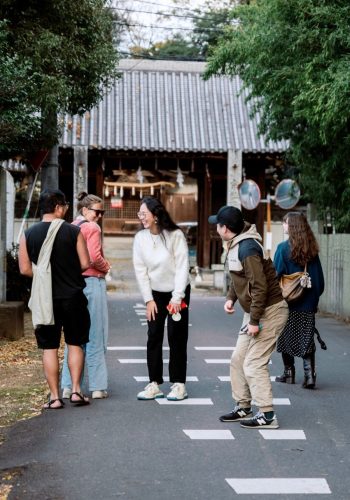
For that pop-up, Alt kept its usual structure going: game nights, shared dinners, a Monday family meeting to plan the week, yoga a few times a week, a day trip to a nearby island, and a few workshops, all optional, with everyone free to propose or join. With just seven of us, something happened almost every day: a shared meal, a card game, a walk in the sun, a train ride for pancakes, a day trip to a nearby town, a tea ceremony.
During the pop-up, I had a few unforgettable nights: karaoke at a local pub mixing US hits and J-pop, a jam session at the local restaurant, coffee with shop owners, learning to make onigiri at the café next door, and even hosting my own photo exhibition in the exhibition space of a café.
Worth knowing: this level of community was largely the pop-up effect. A regular stay at Kotori outside a pop-up session can be a bit more unpredictable socially, depending on who else happens to be around and what’s scheduled that week. That said, Kotori and the town regularly host events, concerts, and festivals, so there’s usually something happening.
Local community with Kotori
Beyond the group itself, the pop-up worked hard to connect us with the town. One workshop brought together digital nomads and local shop owners, who explained they were looking for ways to bring more life to a rural town people tend to leave rather than move to. Their idea: nomads who stay, spend locally, eat out, shop, and meet people create real economic activity, activity that can support new local businesses. Language can be a barrier, but translation apps or a board game usually bridge the gap.
Comfort & Amenities
A sliding door separates the more resident-only areas from the ground floor: a small shared kitchen anyone can use, then the toilets and showers, shared across all rooms and the dorm. Cleaned daily and thoughtfully designed, in Japanese style: heated toilet seats (a bit confusing the first time), and each shower cabin has its own space to leave your clothes and towel before stepping into the shower itself, so nothing gets soaked.

A few cozy armchairs and a desk close out the ground floor before the stairs. Upstairs, one hallway leads to the two-level dorm and two private rooms. The other leads to more rooms, two larger ones facing the back courtyard, and three windowless ones (with a curtained window onto the hallway instead). Rooms have either a futon-style double bed or a double plus a loft bed, small but cozy, with storage and enough space for personal things. Toilets are available on each floor.
Rooms are small but cozy, with enough storage for personal belongings. AC and heating are available throughout, in every room and in the common spaces, a real plus given Japan’s seasonal extremes. The shared kitchen is basic but functional. As a hostel first, comfort here is more « well-kept and functional » than luxurious, but it does the job very well.
Location & Access
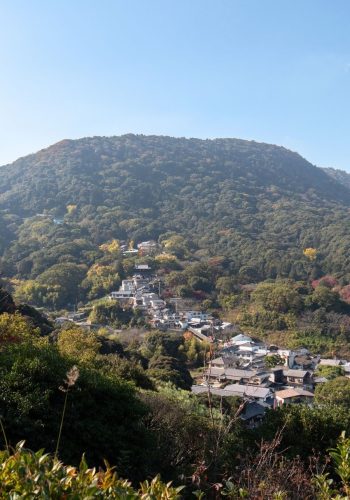
Kotori sits right at the start of Kotohira’s main pedestrian street, walking distance from local shops, cafés, the shrine (up the stairs), and nearby trails and hills. The town has two train stations, both 10 to 15 minutes on foot, plus buses to Osaka, Kobe, Hiroshima, and beyond. A good base with everything close by and easy onward travel.
Kotori also rents a car, handy for day trips further out, and bikes and e-bikes. I’d genuinely recommend the e-bike for riding out to Lake Manno, through flower fields and rice paddies, along traditional backstreets: easy, safe, and a lovely way to see the area.
A note on the shrine and the seasons
Kotori is close to Kotohira's famous shrine, reached by a long staircase, worth the climb at least once during a stay. Each October, a two-day festival carries the shrine's deity down into town and back, at night, in a genuinely striking atmosphere. Cherry blossoms color the town in spring, and autumn brings its own display, with mild weather generally lasting until mid-December.
Value for Money
Straight-up stays at Kotori are excellent value: a private twin room with shared bathroom runs from around $26 a night for a short stay down to roughly $17-18 a night if you commit to a month, some of the most affordable long-stay rates I’ve found in Japan.
The Alt pop-up is a different equation. At $1,400 to $1,830 a month, it’s priced as a full coliving package, covering the community structure, workshops, and shared programming, not just a bed, so it sits closer to standard coliving rates elsewhere rather than hostel pricing. Meals aren’t included in either case. For nomads who just want an affordable long-term base in a quiet, connected town, Kotori’s regular rates are hard to beat. For the pop-up experience specifically, it’s fair for what’s included..
What Works / What to Know Before You Go
- Rock-solid wifi on every floor
- Varied workspace options
- Real, deep connection with the local community
- Car and e-bike rental on site for exploring the region
- Daily-cleaned, thoughtfully designed shared bathrooms despite being shared
- AC and heating throughout, including common spaces
- Rooms are small and functional rather than luxurious
- Shared bathrooms and showers for all rooms and the dorm
- Some rooms have no window to the outside
- Social life outside a pop-up session depends more on who else is around
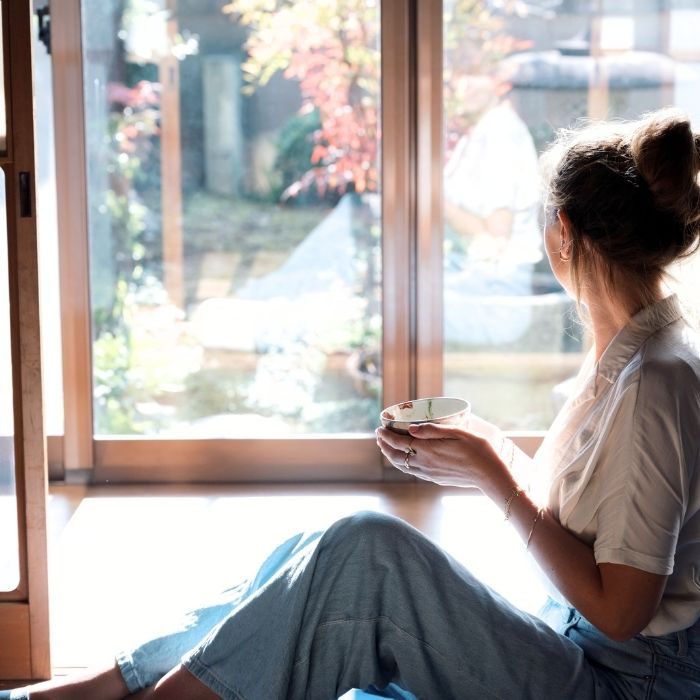
"Kotori isn't the most polished place I've stayed, but it gave me some of my most memorable nights on the road: karaoke with shop owners, a photo exhibition in a neighboring café, being recognized and welcomed back three months later. Real friendships with people who live there, the kind of connection that rarely happens when you're just passing through Japan's main tourist trail."
Practical Logistics
What you need to know before traveling to Kotori in Kotohira.
Most nationalities get a 90-day visa-free entry to Japan as tourists. For longer stays, Japan's Digital Nomad Visa allows remote workers from eligible countries to stay up to 6 months, requiring proof of a minimum income and private health insurance. Always check current requirements for your nationality before booking.
Takamatsu is the nearest airport, about an hour from Kotohira by train or bus. JR trains connect Kotohira directly to Takamatsu, Okayama, and onward to Osaka, Kobe, and Hiroshima. You can also use buses line from Osaka or Kobe.
A local SIM or eSIM is easy to get, either at the airport on arrival or through apps like Airalo or MobiMatter before landing. Coverage is reliable even in a rural area like Kotohira, and most plans offer generous data at reasonable prices.
Contrary to popular belief, Japan isn't expensive for daily life, at least for Europeans or Americans. The flight is usually the biggest expense. Shinkansen tickets run higher, but Kotohira doesn't need them: local trains and buses cover everything at a low cost. Food is very accessible too, a good meal with a drink can run around $5, more for higher-end options like quality sushi, but generally on the cheaper side. A rural town like Kotohira is significantly cheaper than big cities like Tokyo or Kyoto, and that shows in accommodation prices too, much more affordable here.
Who is Oaxaca & Outsite for?
For nomads chasing a slower, more local Japan
Kotori is still growing into a full digital nomad destination, and for now I'd recommend it especially through an Alt x Kotori pop-up coliving: a genuine chance to experience rural Japan, away from mass tourism, with real relationships with locals rather than a string of sightseeing stops. It suits nomads who want varied workspaces, solid wifi, and a town small enough to actually get to know, and who don't need five-star comfort to feel at home.
Booking details
Room type tested
Private rooms, tested across two stays. During the month-long pop-up, a larger room with a window onto the back courtyard and a comfortable futon-style bed. During a later stay, dorm and three of the simple private rooms, most without an outside window (one with a small window onto the street), all sharing the same layout and comfort level.
Price
Standard stays from ~$17-26/night per person depending on length (twin private room, shared bath); Alt pop-up packages from $1,660/month for a single private room.
Minimum stay
None for regular hostel or coworking stays, a single night works fine. Pop-up colivings typically run for one month.
Website & Booking
Book online or get more information about Kotori in Kotohira.
Find more informations about the next pop-up coliving Alt x Kotori.
Transparency
I stayed at Kotori twice. The first, a month-long pop-up coliving with Alt, was paid for normally.
The second time, I returned as community manager for Alt's second pop-up and was also invited by Kotori for a separate three-month stay to write blog articles for their own site, a stay covered by Kotori as part of that work.
This review itself was written independently, and reflects my honest experience across both stays.
The second time, I returned as community manager for Alt's second pop-up and was also invited by Kotori for a separate three-month stay to write blog articles for their own site, a stay covered by Kotori as part of that work.
This review itself was written independently, and reflects my honest experience across both stays.