CoLiving Review
Ubud - Bali
Outpost
A high-end coliving spread across three connected spaces in Ubud: a serene original property, a nearby coworking hub, and a lively second site where most of the real action happens.
Looking for an honest Outpost Ubud review before you book? Here's exactly what a month across their three connected spaces was like.
Jump to a section
Why Bali, why Outpost?
I decided to visit Bali after a stretch in Vietnam (were I stayed at Hub Hoi An among other stops). Bali wasn’t necessarily my top pick going in, it landed on my list mostly because it was one of the few places in the region not deep in rainy season that June and July. I spent 10 days near Uluwatu on the southern tip, three weeks in Canggu, then a month in Ubud with Outpost, before finishing with a few nights in Amed.
Outpost Ubud was my first real high-end coliving experience, and my first time paying real hotel-level rates for a coliving room. It can feel steep at first, especially somewhere as affordable as Bali generally is. But it genuinely delivers.
Wifi
Workspace
Community
Value for Money
How it works at Outpost Ubud
Outpost in Ubud is really three connected spaces, and understanding how they fit together matters before booking:
Your access covers the whole ecosystem, so where you sleep doesn't have to determine where you work. In practice, I ended up spending about three-quarters of my time at Penestanan, even though I lived at Nyuh Kuning.
Wifi & Connectivity
Wifi at Outpost Ubud is solid and reliable everywhere, across all three spaces, no complaints.
Workspace & Productivity

At Nyuh Kuning Live (where I stayed): near the entrance, there’s an open-air space with a proper kitchen (fridge, everything you’d need for basic cooking), a corner sofa with games and a TV, and desks along the walls with ergonomic chairs and outlets. No AC since it’s open to the outside, but comfortable for a few hours of work.
The coliving is attached to a café that hosts themed and music nights, serves breakfast through dinner, and occasionally hosts community events like shared dinners or game nights.
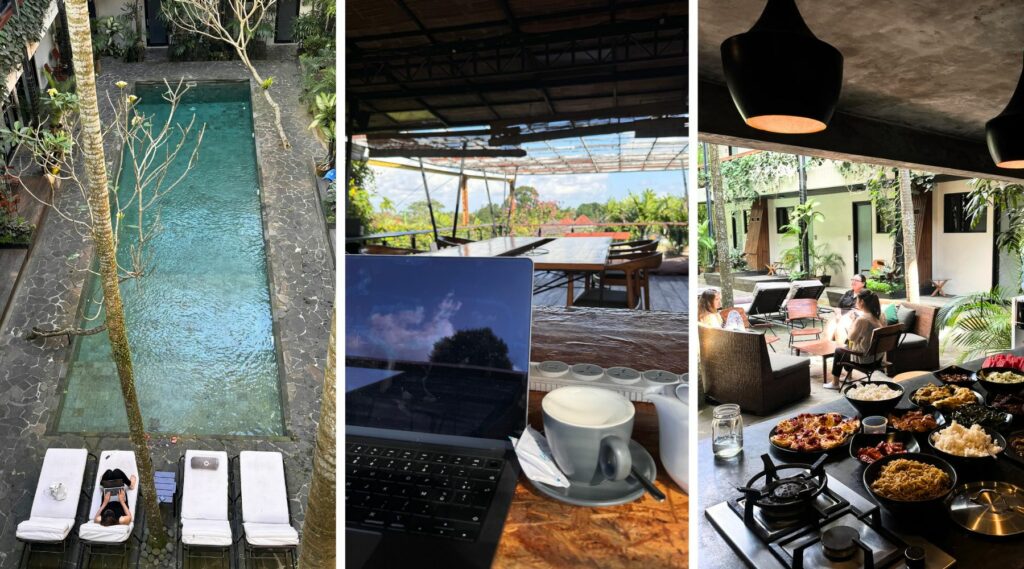
At Nyuh Kuning Coworking (700m away): shoes off at the door, as is customary here. There’s a meeting room downstairs (also used for workshops or private company bookings), an air-conditioned ground floor with large tables, standing desks, and sofas (the AC ran a bit too strong for my taste), and an upstairs floor split into several open zones: a big table for meetings or group work, desks for two, standing desks along the windows, a small balcony with a work table, and stairs down to the garden. This upper floor, with lighter AC control, is where I worked most when I used this space. A ground-floor café (independent but accessible from the coworking) serves coffee, tea, breakfast, lunch, and snacks.
At Penestanan (where I spent most of my time): the coworking here is fully enclosed and air-conditioned, smaller than Nyuh Kuning’s but thoughtfully laid out: rows of desks with outlets, varied ergonomic seating, a few bookable phone booths, lockers, hot water and mugs, a mini fridge, a shoe-removal area, and bookable meeting rooms. I used this space heavily, especially on days with lunches or workshops happening on site.
Across all locations, having a scooter makes moving between spaces far easier, though Nyuh Kuning Coworking is an easy walk from the Live residence.
Community & Social Life

Compared to Hub Hoi A before, or KoHub, Alt, and CO404 after, this was fairly average. The WhatsApp group was active, but making real friends took real effort. There wasn’t much regular programming, a few day trips or activities came up here and there, but no consistent recurring nights out (at least during my stay).
My real connections came from residents proposing things themselves (an informal meetup on starting a project, a dinner out, a pub quiz night) and from the workshops and lunches.
The community manager on site, though, was always reachable and quick to help make things happen. When I mentioned wanting to try a macramé workshop, she organized it directly with my contact, and it turned into a wonderful shared afternoon.
Comfort & Amenities
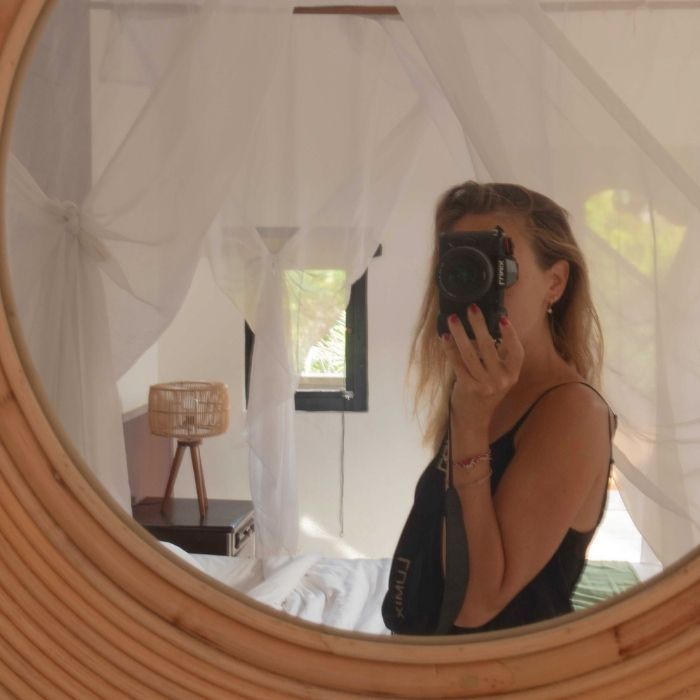
My room, on the upper floor of Nyuh Kuning Live, was excellent: a heavy wooden Balinese-style door, a spacious layout with a king-size bed, a small desk with a reasonably comfortable chair, dark wood furniture, a mini fridge, an archway into a dressing area, then a stone bathroom with a large shower and toilet. Daily housekeeping, bed made fresh, towels beautifully arranged, hotel-level service every day.
One small logistical note: my room sat at the far end of the residence, and while the in-room mini fridge was great for drinks, fruit, or snacks, the shared kitchen was on the opposite side of the property. Bringing groceries over meant either keeping them in my room’s small fridge or using the shared kitchen, which didn’t have much dedicated storage space of its own for that. A bit more storage there would help. Worth noting this was back in July 2024, so it may well have improved since.
The property itself is built in traditional Balinese style, entered through a small stone gate opening onto a central lawn and a pool with a fountain and loungers. Rooms line the sides across two floors, ground-floor rooms with a small terrace, upper-floor rooms (mine included) with a balcony, two chairs, and a coffee table. Quiet, day and night.
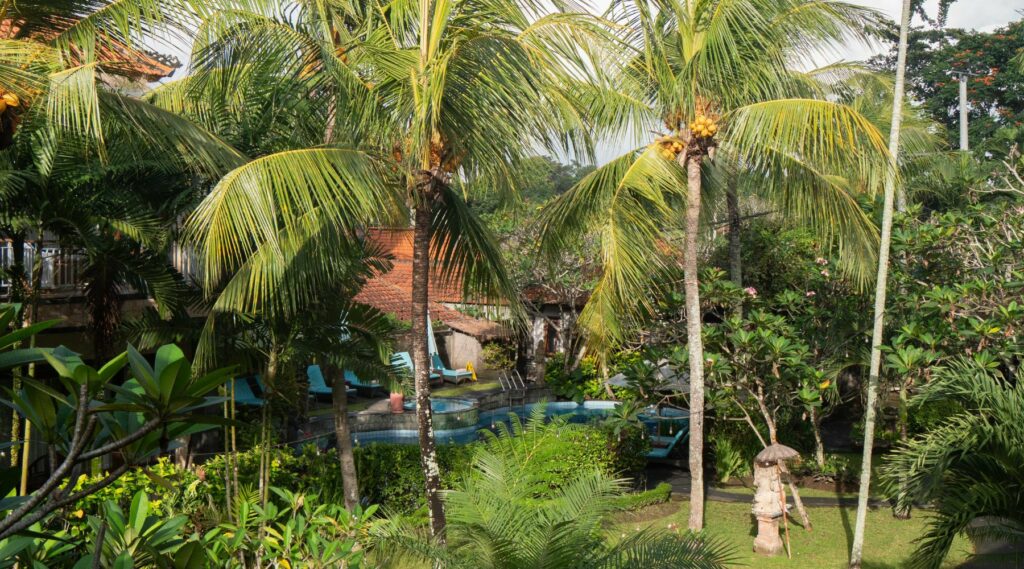
At Penestanan, the building is modern and square, wrapped around an open central courtyard and pool, so every room overlooks it regardless of floor. Ground-floor rooms open directly onto the pool. The shared kitchen downstairs has individual wooden shelving, fridge space, and everything needed to cook, and it’s where the other family lunches happen (self-serve, fixed price, eaten around the pool and lounge furniture). On the top floor, a large teak terrace with a partly covered café looks out over the area, warm on sunny days but well ventilated, with a mix of lounge and work-friendly seating.
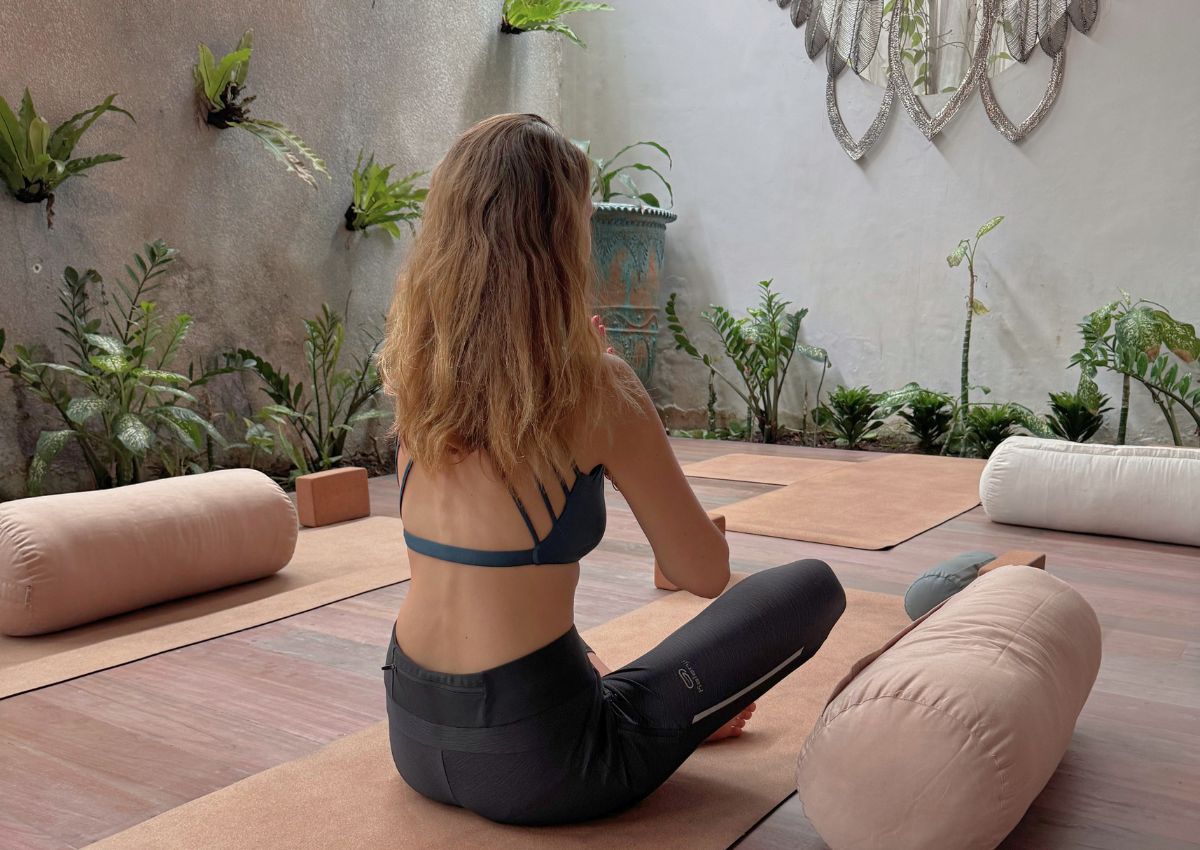
An open-air section of the same terrace hosts activities like yoga or flower-craft workshops, with cushions and yoga mats available. There’s also a weekly yoga class held right on the terrace, canceled if it rains. The café area also sets up a projector and screen for evening events or workshops, sometimes led by residents, sometimes by outside guest speakers.
Location & Access

Nyuh Kuning Live sits near the Sacred Monkey Forest, with easy access to central Ubud.
Penestanan sits in a livelier area, on a street full of cafés and restaurants, including Alchemy Yoga, a popular studio with its central dome for classes.
Both areas are pleasant, just different in energy, and everything is more convenient with a scooter.
Value for Money
Outpost sits on the pricier end for Bali, but the quality backs it up: excellent rooms, real hotel-level service, three well-designed spaces to choose from, and a decent mix of social and focus time. If you’re weighing the cost, I’d say it earns it.
What Works / What to Know Before You Go
- Reliable wifi across every location
- Hotel-level room comfort and daily housekeeping
- Real choice of workspaces depending on mood
- Workspace pen 24/7
- Community manager genuinely responsive and helpful when you take initiative
- Regular family lunches, a good way to meet people naturally
- Beautiful pools at both properties
- Community and events are less structured than other colivings, expect to be proactive
- AC in the Nyuh Kuning Coworking ground floor runs quite strong
- Living and working spaces are split across three different addresses, a scooter helps a lot
- Limited shared kitchen storage at Nyuh Kuning Live
I loved having my own quiet pool and garden to come home to after a day of work and workshops elsewhere. But if I had to come back, I'd probably stay at Penestanan instead, simply because it's easier to work where you live than to keep carrying your laptop across town. Either way, Outpost gave me exactly what I needed: a beautiful place to land, real work options, and enough community to make genuine connections if I put in the effort.
Practical Logistics
What you need to know before traveling to Ubud, Bali and Outpost.
Most nationalities get a Visa on Arrival (~$35), valid 30 days and extendable once for another 30 (60 days total).
For longer stays, most digital nomads use the B211A social/cultural visa (about 60 days, extendable up to 180 days total, roughly $300 all in with an agent).
Indonesia's official Remote Worker Visa (E33G) also exists, but requires proof of substantial foreign income (around $60,000/year) and is better suited to longer-term stays.
The nearest airport is Ngurah Rai International Airport (Denpasar/DPS), about 35-40km from Ubud, roughly 1 to 1.5 hours by car depending on traffic. Official airport taxis run around $20-35, private transfers (often with meet-and-greet service) around $28-38, and Grab typically comes in a bit cheaper if you're comfortable walking to the designated pickup zone outside the terminal. Outpost also offers an airport pick-up add-on if you'd rather have it sorted in advance.
A local SIM (Telkomsel, IM3, or XL) with around 20-25GB valid for 30 days typically costs $6 to $15, depending on the provider and where you buy it (airport counters run a bit higher than local shops in town). Apps like Airalo or MobiMatter are also an easy option if you'd rather sort your eSIM out before landing.
Bali overall stays affordable, though Ubud's nomad hubs run a bit higher than off-the-radar areas, expect $800 to $1,500/month for a comfortable nomad lifestyle in the busier zones.
Good to know: if you want to save money, stick to local restaurants, where delicious Balinese food runs under $5.
Renting a scooter for your whole stay, with long-term rates, works out cheaper than relying on Grab or similar apps for daily moves (those apps make more sense for occasional trips than everyday use).
Ubud offers endless options: day trips into Balinese culture, hundreds of great, affordable cafés and restaurants, yoga, dance classes, salsa and bachata nights, pub quizzes, board game nights, ecstatic dance, whatever your style, there's something here, sometimes almost too much.
Who is Ubud & Outpost for?
For nomads who want routine, wellness, and connection
Outpost suits nomads looking to build a real routine, blend focused work with wellness and healing-focused activities (yoga, ecstatic dance, meditation, and everything Ubud is known for), and grow their network alongside their social life. It rewards a bit of initiative: reach out, join the lunches and workshops, and you'll truly connect with people. Ubud itself fills in the rest, with more cafés, activities, and nightlife than you could get through in a month.
Booking details
Room type tested
Standard Room, Nyuh Kuning Live, upper floor
Price
Standard Rooms start from around $34/night on a discounted non-refundable monthly rate (about $1,020/month), or around $37/night on a refundable monthly rate (about $1,120/month). Rates and room options vary, check current pricing and availability directly on the Outpost website.
Minimum stay
None, single nights can be booked. Discounts kick in from 7 nights (5% off), 14 nights (10% off), and 28 nights (15% off).
Website & Booking
Book or get more information about Destination Outpost online.
Transparency
This stay was paid for in full, at standard rates. No partnership involved.